

 GMKB
GMKBChristelle Lteif; Larisa H. Cavallari
- DOI: 10.3389/fphar.2026.1817652
- Article on Jama Network
Christelle Lteif; Larisa H. Cavallari
A new manuscript from the IGNITE Pragmatic Trials Network has been published in JAMA Network Open, describing results from the ADOPT PGx Depression trial. The randomized clinical trial evaluated whether genotype-guided prescribing of selective serotonin reuptake inhibitors (SSRIs) could improve outcomes for patients with depression.
The study enrolled 1,460 adults and children receiving care in primary care, psychiatry, and family medicine clinics across the United States. Researchers examined whether pharmacogenetic information related to CYP2D6 and CYP2C19 — genes that influence how individuals metabolize antidepressants — could help guide SSRI prescribing compared with usual care.
Among participants with actionable pharmacogenetic profiles, genotype-guided prescribing did not significantly improve depression symptom scores at 3 months, the study’s primary endpoint. However, patients in the genotype-guided group experienced higher rates of depression remission at 6 months than those receiving usual care, suggesting a potential longer-term benefit of pharmacogenetic-informed prescribing.
GenomeWeb coverage of the publication underscored the study’s broader relevance to the evolving role of pharmacogenetics in depression care, particularly as psychiatry guidelines continue to weigh the evidence for routine implementation. The ADOPT PGx findings contribute important new data to that discussion, highlighting both the promise of precision medicine approaches and the need for further research on long-term outcomes, clinical implementation, and access.
Together, these findings add meaningful evidence to ongoing efforts to understand how precision medicine strategies may support more individualized depression treatment and improve antidepressant response over time.
Read the publication here.
Kathryn V. Blake, PharmDLindsay J. Hines, PhDMichelle Liu, PharmD
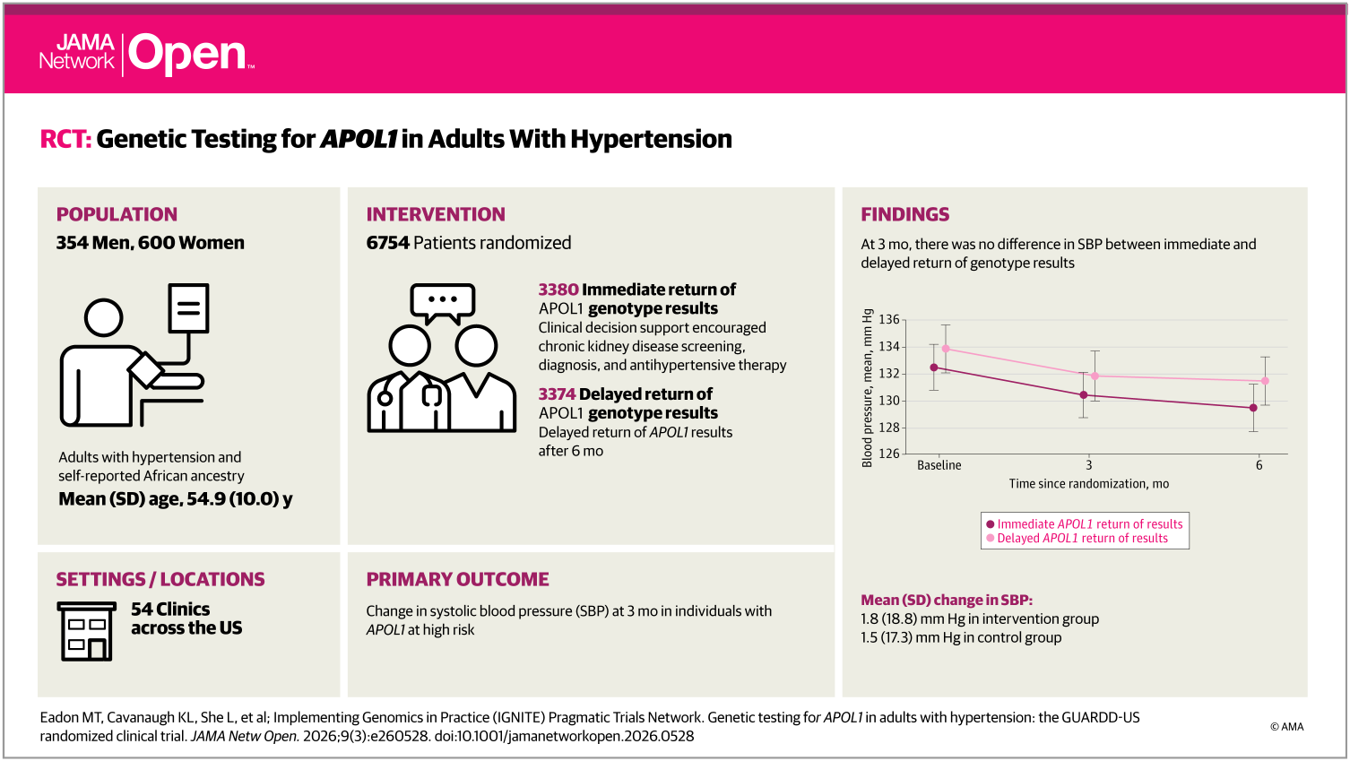
A new manuscript from the IGNITE Pragmatic Trials Network has been published in JAMA Network Open, describing the primary results of the GUARDD-US study. GUARDD-US is a randomized controlled trial examining the impact of returning APOL1 genetic risk results to patients with hypertension and their clinicians. The study explores whether knowledge of genetic risk for kidney disease can influence blood pressure management and chronic kidney disease (CKD) screening in routine clinical care. GUARDD-US enrolled more than 6,700 participants with self-reported African ancestry across 54 clinical sites in the United States, reflecting populations disproportionately affected by hypertension and CKD.
The primary outcome assessed changes in systolic blood pressure three months after randomization among individuals with APOL1 high-risk genotypes. Overall, immediate disclosure of genetic results was not associated with a significant reduction in systolic blood pressure compared with delayed disclosure. However, among participants who had uncontrolled blood pressure at baseline, those who received their genetic results experienced greater improvements in blood pressure control.
Importantly, returning APOL1 results also influenced clinical care beyond blood pressure management. Participants and clinicians who received immediate genetic results were more likely to pursue CKD screening and had higher rates of CKD diagnosis, highlighting the potential of genomic information to support earlier detection of kidney disease in at-risk populations.
Read the publication here.
Michael T. Eadon, MD; Kerri L. Cavanaugh, MD, MHS; Lilin She, PhD
The ADOPT-PGx study examined the impact of genotype-guided opioid prescribing on postoperative pain management. Results from the study were recently published in JAMA Network Open, accompanied by an invited commentary reflecting on the findings and their implications for pharmacogenetics in clinical care.
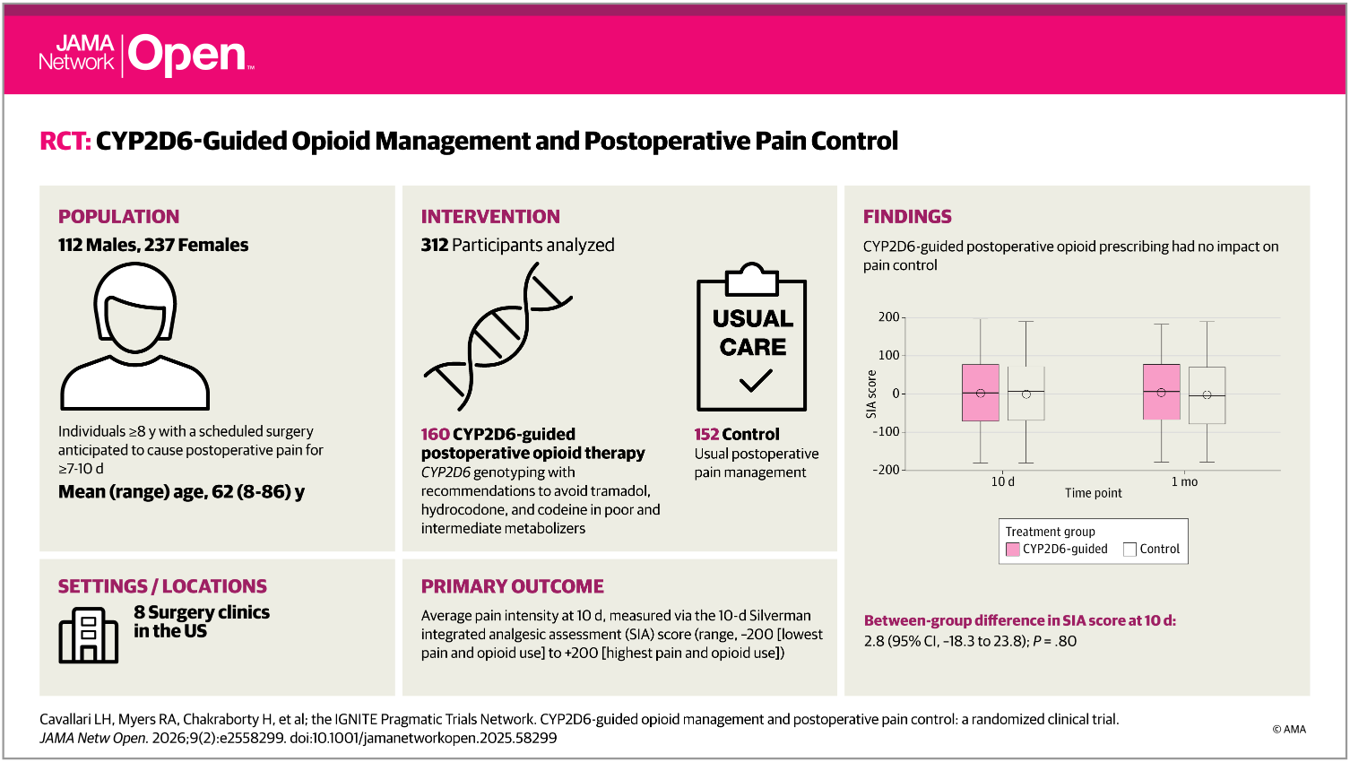
ADOPT-PGx is a pragmatic, randomized clinical trial designed to evaluate whether CYP2D6-guided opioid prescribing improves pain outcomes following surgery compared with usual care. The study was conducted in real-world clinical settings to assess the feasibility and effectiveness of pharmacogenetic implementation at scale.
The primary outcome focused on postoperative pain control, with secondary outcomes examining prescribing patterns and opioid use. While genotype-guided prescribing influenced medication selection, the study found no significant improvement in pain outcomes, underscoring the complexity of acute pain as a multifactorial clinical phenotype.
The invited commentary places these findings in broader context, highlighting both the promise and current limitations of single-gene pharmacogenetic approaches for pain management and emphasizing the need for more integrated strategies to support personalized care.
Read the publication here.
Read the invited commentary here.
Larisa H. Cavallari, PharmD1; Rachel A. Myers, PhD; Hrishikesh Chakraborty, DrPH
Nihal El Rouby, Julie A Johnson
Tom A Doyle, Samantha L Vershaw, Karen K Schmidt, Todd C Skaar, Peter H Schwartz
Noor A Nahid, Caitrin W McDonough, Yu-Jung Jenny Wei, Yan Gong, Philip E Empey, Andrew Haddad, Roger B Fillingim, Julie A Johnson