Midwest Genetics Network Annual Meeting

Wednesday, September 28-Thursday, September 29 | 1-5pm ET | Virtual

The theme of this year’s Midwest Genetics Network (MGN) virtual Annual Meeting is Raising the Bar: Building Authentic Relationships”. Over the course of the two day meeting, attendees will dialogue about how to develop and sustain meaningful engagement with stakeholders and other partners to promote the best possible outcomes for individuals living with genetic conditions.

The keynote speaker for the event is Abner Mason. Abner has spent decades working to reduce barriers to care faced by underserved people nationally and internationally. As the founder and CEO of SameSky Health, he leads a team of diverse professionals who strive every day to improve outcomes and lower costs on behalf of health plans.

The conference will also include a panel discussion of Rare Disease Advisory Councils (RDACs) in MGN’s seven state region. RDACs are advisory panels that give the rare disease community a stronger voice in state government and are supported by NORD.
Learn more and register on the MGN website.

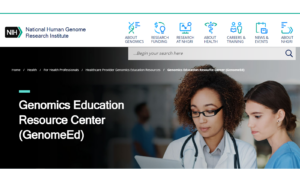
NIH Genetics/Genomics Competency Center is refreshed and renamed to GenomeEd

The National Human Genome Research Institute’s Genetics/Genomics Competency Center (G2C2) has been a valued resource for healthcare provider educators and learners alike for over 10 years. The resource, now called GenomeEd, has recently undergone a refresh to make it easier for educators and current practitioners to find high-quality resources for group instruction or self-directed learning.
Learn more on the National Human Genome Research Institute website.

PTEN hamartoma tumor syndrome: A personalized healthcare journey

PTEN hamartoma tumor syndrome: A personalized healthcare journey

Monday, August 22 | 12-1 p.m. ET | Virtual

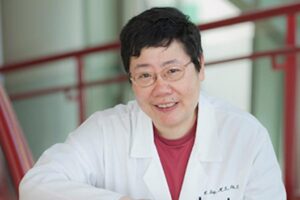
Charis Eng, MD, PhD, FACPDr. Charis Eng, is a leader in the field of cancer genetics. She was the first to discover a link between mutations in the cancer suppressor gene PTEN and Cowden syndrome and other disorders that can put patients at an increased risk for several types of cancer. Read more about her work in this Q&A with Dr. Eng.
This lecture is part of the Precision Genomic Collaboratory’s Genomic Seminar Series, a quarterly seminar series that highlights leading researchers and their high-level vision for genetics, genomics, and ‘omics broadly.

Learn more about Dr. Eng’s virtual lecture on the Genomic Seminar Series website.

ASHG Annual Meeting

October 25-29 | Los Angeles, CA

ASHG 2022 will take place October 25-29 in Los Angeles. The meeting provides a forum for the presentation and discussion of cutting-edge science in all areas of human genetics. ASHG members and leading scientists from around the world are selected to present their research findings at invited, plenary, platform, and poster sessions. This year’s meeting will be an unmatched opportunity to reunite and reconnect with your colleagues in a warm, diverse, and welcoming city. The official meeting language is English.

Registration is required and fees vary. Visit the ASHG website for more details about the conference.

Coronary Heart Disease, Family History and Public Health: From Familial Hypercholesterolemia to Elevated Lipoprotein A

Thursday, April 27 | 11 am-12 p.m. ET | Online
CDC Webinar: Coronary Heart Disease, Family History and Public Health: From Familial Hypercholesterolemia to Elevated Lipoprotein A

Heart disease remains the number one cause of death in the United States and around the world. In addition to known risk factors for heart disease, family history plays an important role. In the past decade, major advances have occurred at the intersection of genomics, heart disease and public health. Familial hypercholesterolemia (FH), a genetic disorder of cholesterol metabolism affecting millions of people, has emerged as public health genomics priority for preventing premature morbidity and mortality from heart disease. In addition, elevated lipoprotein (a) (Lp(a)) increases the risk of coronary heart disease, occur in 1 in 5 people, have a strong genetic basis, and accentuate the cardiovascular risk from FH and other risk factors.

This seminar will explore advances in FH and Lp(a) and the emerging clinical and public health approaches to reducing the burden of cardiovascular disease using genetics and family history.

Please note: registration is required. Visit the CDC’s website to learn more and sign up.

Laurence Sperling, MD, FACC, FACP, FAHA, FASPC; Ijeoma Isiadinso MD, MPH, FACC, FASNC

Irreducible Subjects: Disability and Genomics in the Past, Present and Future

October 6-7, 2022 | 10 a.m.-5 p.m. | Virtual 

The National Human Genome Research Institute (NHGRI) and the University at Buffalo Center for Disability Studies will hold a two-day symposium entitled, “Irreducible Subjects: Disability and Genomics in the Past, Present and Future.”

The symposium will address historical and present-day constructions of disability and ableism, with a focus on the history and lived experiences of people with disabilities in the context of genetics and genomics.

Learn more about this virtual event on the NHGRI website.