Integrated multi-omics for rapid rare disease diagnosis on a national scale

Sebastian Lunke, Sophie E BoufflerChirag V PatelSarah A SandaraduraMeredith WilsonJason PinnerMatthew F HunterChristopher P BarnettMathew WallisBenjamin Kamien, Tiong Y TanMary-Louise FreckmannBelinda ChongDean PhelanDavid FrancisKarin S KassahnThuong HaSong GaoPeer ArtsMatilda R JacksonHamish S ScottStefanie EggersSimone RowleyKirsten BoggsAna RakonjacGemma R BrettMichelle G de SilvaAmanda Springer, Michelle WardKirsty Stallard, Cas SimonsThomas Conway, Andreas Halman, Nicole J Van BergenTim SikoraLiana N SemcesenDavid A StroudAlison G ComptonDavid R ThorburnKatrina M BellSimon SadedinKathryn N NorthJohn ChristodoulouZornitza Stark

Healthcare Professionals’ Genomics Education Week

Monday, June 5 – Friday, June 9 | Online

Genomics is becoming an increasingly important part of patient care, but healthcare providers may not be aware of genomics education resources that are available. The National Human Genome Research Institute and its partners are organizing a social media campaign from June 5 to June 9, 2023, that focuses on healthcare provider genomics education. This initiative will include panel discussions, webinars, Twitter chats and Q&As.

Follow on Twitter: #MedGeneEd23

Themes:

Visit the NHGRI website for a detailed schedule of presentations.

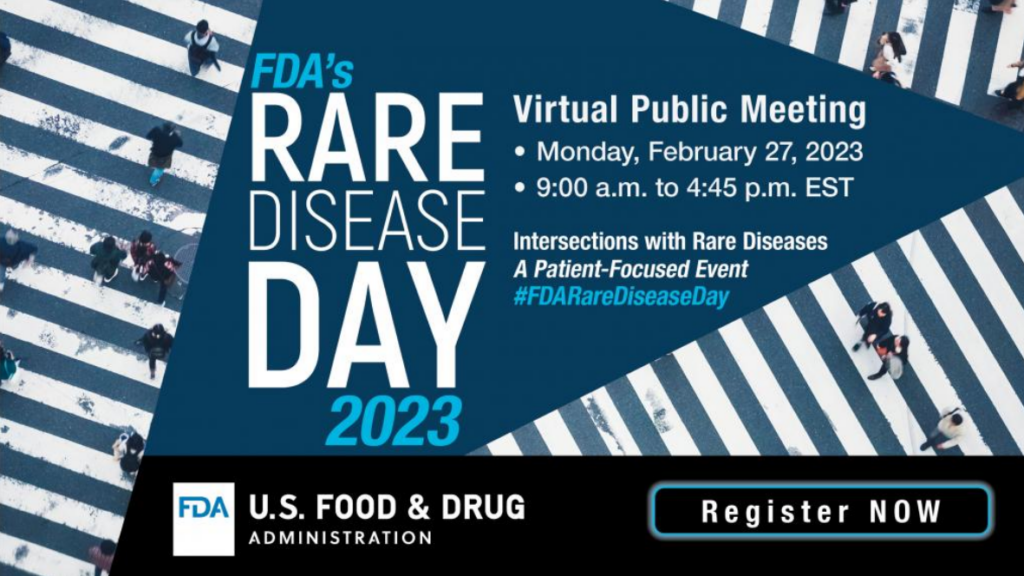
Public Meeting: FDA Rare Disease Day

Monday, February 27 | 9 a.m.-4:45 p.m. ET | Online

The U.S. Food and Drug Administration (FDA) will host Rare Disease Day, a virtual public meeting, on February 27, in global observance of Rare Disease Week. This year’s theme is “Intersections with Rare Diseases – A patient focused event.” Participants will have the unique opportunity to:

  • Hear directly from the FDA on initiatives to advance medical product development for rare diseases.
  • Engage with the FDA to provide your perspectives as a patient, caregiver or family member.
  • Understand considerations and challenges associated with clinical trials in small populations.
  • Hear from medical students on rare disease education for medical professionals.

Learn more and register for the event on the FDA’s website.

Leveraging Genomics to Address Health Disparities in Rare Diseases and Cancer Screenings

Thursday, February 16 | 3:30 – 4:30 p.m. ET | Online & Bethesda, MD

C. Jimmy Lin, M.D., Ph.D., MHS is the Founder and Chief Executive Officer of Rare Genomics (RG) Institute, an international non-profit founded in 2011 to enable any community to leverage cutting-edge biotechnology to advance understanding of rare diseases. Dr. Lin is also the Chief Scientific Officer at Freenome, working on early diagnostic of cancers. Prior to Freenome, he was the Chief Scientific Officer, Oncology at Natera where he led the development of new diagnostic technologies for cancer.

Before his career in private industry, Dr. Lin led the ClinOmics program at the National Cancer Institute (NIH/NCI) and was a research instructor at Washington University in St. Louis. Dr. Lin earned his MD and PhD from Johns Hopkins School of Medicine and a Master of Health Science from the Johns Hopkins Bloomberg School of Public Health, creating genome-wide maps of breast, colorectal, pancreatic, glioblastoma, medulloblastoma, and melanoma cancers, as well as mapping the genome of an anaerobic bacteria that is used as anti-tumor therapy. He is a 2016 Senior TED Fellow and a 2016 WIRED Innovation Fellow and has been featured in several media outlets, including Forbes, Bloomberg, Wall Street Journal, New York Times, Washington Post, BBC, and TIME Magazine.

Register on the NGHRI Genomics and Health Disparities Lecture Series website.

We Screen Newborns Don’t We? Progress in DNA-based Population Screening

Thursday, May 18 | 10 – 11 a.m. ET | Online

Rapid advances and decreasing costs of human genome sequencing technologies are accelerating the integration of genomics into clinical practice. Although genomic sequencing has demonstrated utility as an indication-based diagnostic tool for certain diseases, the full potential of DNA sequencing for population-level screening is yet to be realized. DNA-based population screening has enormous potential to identify people with underlying genetic predisposition to serious diseases such as cancer and heart disease, who represent 1–2% of the population. Early detection, disease prevention, and timely treatment can improve health outcomes and equity, and usher in a new era of precision public health.

Learn more and register for this webinar on the CDC Genomics and Precision Health website.

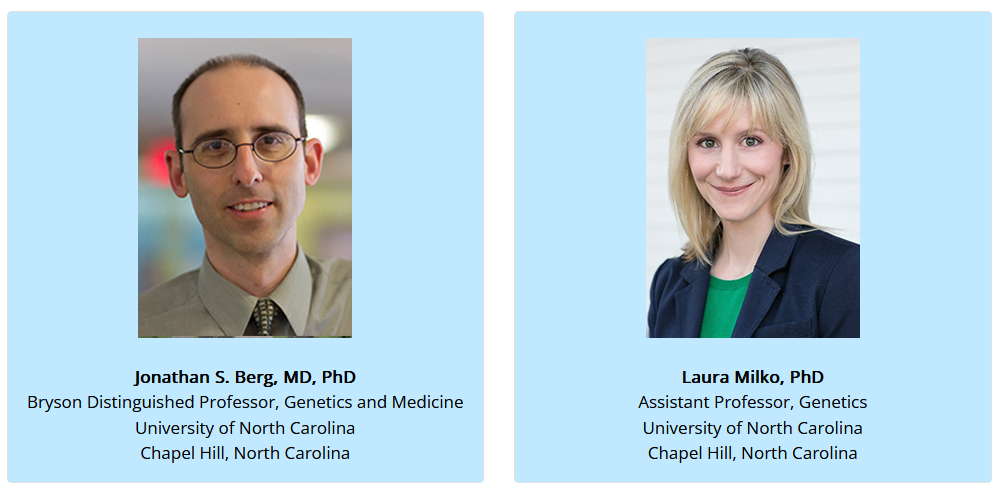
Speakers:

Jonathan S. Berg, MD, PhD
Bryson Distinguished Professor, Genetics and Medicine
University of North Carolina
Chapel Hill, North Carolina

Laura Milko, PhD
Assistant Professor, Genetics
University of North Carolina
Chapel Hill, North Carolina