Health equity in the implementation of genomics and precision medicine: A public health imperative

Muin J Khoury, Scott Bowen, W David Dotson, Emily Drzymalla, Ridgely F Green, Robert Goldstein, Katherine Kolor, Leandris C Liburd, Laurence S Sperling, Rebecca Bunnell

Abstract

Recent reviews have emphasized the need for a health equity agenda in genomics research. To ensure that genomic discoveries can lead to improved health outcomes for all segments of the population, a health equity agenda needs to go beyond research studies. Advances in genomics and precision medicine have led to an increasing number of evidence-based applications that can reduce morbidity and mortality for millions of people (tier 1). Studies have shown lower implementation rates for selected diseases with tier 1 applications (familial hypercholesterolemia, Lynch syndrome, hereditary breast and ovarian cancer) among racial and ethnic minority groups, rural communities, uninsured or underinsured people, and those with lower education and income. We make the case that a public health agenda is needed to address disparities in implementation of genomics and precision medicine. Public health actions can be centered on population-specific needs and outcomes assessment, policy and evidence development, and assurance of delivery of effective and ethical interventions. Crucial public health activities also include engaging communities, building coalitions, improving genetic health literacy, and building a diverse workforce. Without concerted public health action, further advances in genomics with potentially broad applications could lead to further widening of health disparities in the next decade.

Keywords: Genomics; Health equity; Precision medicine; Public health genomics.

Ancestry and Diseases in Latin American Populations Seminar

Thursday, November 3 | 2-3 p.m. ET | Virtual

In this seminar titled “Ancestry and diseases in Latin American populations,” Dr. Eduardo Tarazona-Santos will discuss his work using genomics, bioinformatics and public health in global precision medicine. Learn more and register on the NHGRI website.

Speaker:
Eduardo Tarazona-Santos, Ph.D.
Professor, Department of Genetics, Ecology and Evolution
Institute of Biological Sciences
Federal University of Minas Gerais
Brazil

Genetics-Related COVID Cohorts Webinar

Monday, October 3 | 9-10 a.m. ET | Virtual

The IHCC is debuting a new panel series as part of the IHCC Educational Webinar Series. This Panel Discussion will focus on Genetics-Related COVID-19 Cohorts.

The panelists for this first session will include:

  • Dr. Sarah Bauermeister: Global Mental Health Impact of the COVID-19 Pandemic
  • Dr. Michèle Ramsay: Potential impact of genetic diversity on COVID-19 host susceptibility in African populations
  • Dr. Ricardo Verdugo: Creating a Multi-centric COVID-19 Cohort for Genomic and Proteomic Research on Chilean Patients
  • Dr. Albert Tenesa: Citizen science meets COVID research: Coronagenes study

This panel will be moderated by Dr. Nicki Tiffin.

Registration is required. Sign up on the IHCC website.

IHCC Panel Discussion on Genetics-Related COVID Cohorts - Photos of Panelists

NIH Genetics/Genomics Competency Center is refreshed and renamed to GenomeEd

The National Human Genome Research Institute’s Genetics/Genomics Competency Center (G2C2) has been a valued resource for healthcare provider educators and learners alike for over 10 years. The resource, now called GenomeEd, has recently undergone a refresh to make it easier for educators and current practitioners to find high-quality resources for group instruction or self-directed learning.

Learn more on the National Human Genome Research Institute website.

Playing genomic battleship with CRISPR technologies to uncover non-coding functional elements and their phenotypic effects

Thursday, September 29, 2022 | 3 – 4:15 p.m. ET | Virtual

Beginning September 2022, NHGRI will host a new seminar series based on its Genomic Innovator Award Program, which supports innovative work by early-career genomics investigators who are part of consortia or other team-science efforts. Each seminar will feature an early-career researcher and an established researcher. Their presentations will cover specific topics that showcase the creative ways that early-career investigators are accelerating genomics research.

Each seminar will include two speakers (each giving 20-minute talks) followed by a moderated Q&A session.

This seminar will be presented by speakers Luca Pinello, Ph.D. of the Harvard Medical School and Massachusetts General Hospital and Karen Mohlke, Ph.D. of the University of North Carolina.

Please note: registration is required. Learn more and register on the Genomic Innovator Seminar Series website.

ASHG Annual Meeting

October 25-29 | Los Angeles, CA

ASHG 2022 will take place October 25-29 in Los Angeles. The meeting provides a forum for the presentation and discussion of cutting-edge science in all areas of human genetics. ASHG members and leading scientists from around the world are selected to present their research findings at invited, plenary, platform, and poster sessions. This year’s meeting will be an unmatched opportunity to reunite and reconnect with your colleagues in a warm, diverse, and welcoming city. The official meeting language is English.

Registration is required and fees vary. Visit the ASHG website for more details about the conference.

Coronary Heart Disease, Family History and Public Health: From Familial Hypercholesterolemia to Elevated Lipoprotein A

Thursday, April 27 | 11 am-12 p.m. ET | Online
CDC Webinar: Coronary Heart Disease, Family History and Public Health: From Familial Hypercholesterolemia to Elevated Lipoprotein A

Heart disease remains the number one cause of death in the United States and around the world. In addition to known risk factors for heart disease, family history plays an important role. In the past decade, major advances have occurred at the intersection of genomics, heart disease and public health. Familial hypercholesterolemia (FH), a genetic disorder of cholesterol metabolism affecting millions of people, has emerged as public health genomics priority for preventing premature morbidity and mortality from heart disease. In addition, elevated lipoprotein (a) (Lp(a)) increases the risk of coronary heart disease, occur in 1 in 5 people, have a strong genetic basis, and accentuate the cardiovascular risk from FH and other risk factors.

This seminar will explore advances in FH and Lp(a) and the emerging clinical and public health approaches to reducing the burden of cardiovascular disease using genetics and family history.

Please note: registration is required. Visit the CDC’s website to learn more and sign up.

Laurence Sperling, MD, FACC, FACP, FAHA, FASPC; Ijeoma Isiadinso MD, MPH, FACC, FASNC

Host Genomics and COVID-19: Implications for Clinical and Public Health Practice Webinar

Thursday, October 6 | 11 am-12 pm ET

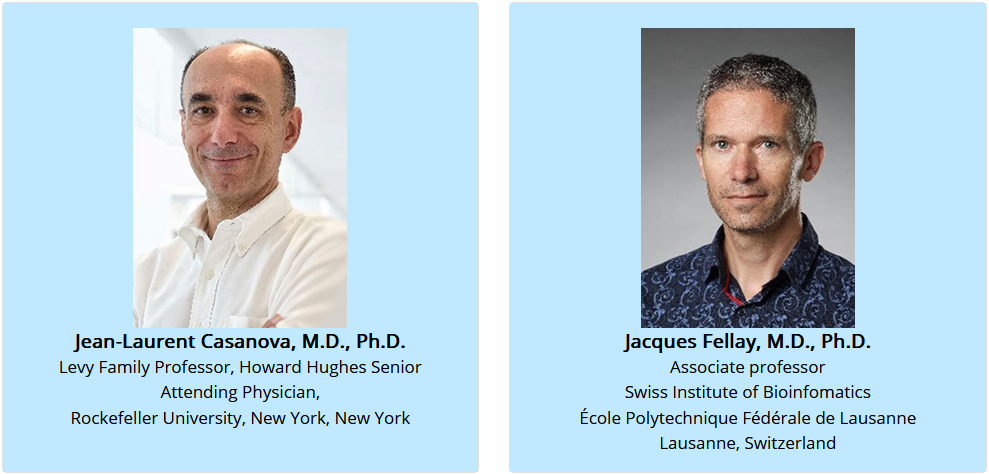
This seminar will review our emerging knowledge of the role of host genomic factors in the susceptibility and outcomes of COVID-19 infection, response to vaccines and treatments as well as long-term sequels of the disease. Speakers Jean-Laurent Casanova, M.D., Ph.D. and Jacques Fellay, M.D., Ph.D. will discuss implications of such knowledge for clinical and public health practice and how this information could be used in the control of the pandemic, and more generally in the control of infectious diseases.

Please note: registration is required.

Learn more about the webinar and register for the webinar on the CDC’s website.

Jean-Laurent Casanova, M.D., Ph.D. and Jacques Fellay, M.D., Ph.D.