2024 Precision Health Research Symposium

2024 Precision Health Research Symposium

November 14 – 15 | Medical University of South Carolina

Join the Precision Public Health Network for their third conference focused on Advancing Equity through Precision Health. The conference will coincide with MUSC’s second annual Precision Health Research Symposium.

For more conference information and to register, visit the event pagePlease note: Registration is required.


Call for Abstracts

Registrants interested in participating in the symposium poster session are invited to submit abstracts. Abstracts should have a maximum of 300 words and abstract submitters must register for Day 1 of the symposium. Abstract submissions close on June 15, 2024. Abstracts can be submitted here.
Training in Genomics & Precision Public Health

Thursday-Friday, September 7-8 | Online

Advances in genomics, data science, machine learning, and artificial intelligence are transforming practice. Next generation public health and medical workforces need to understand these developments and how they can be used to benefit population health.

Recognizing this challenge, Oak Ridge Institute for Science and Education (ORISE) is partnering with the Office of Genomics and Precision Public Health at the Centers for Disease Control and Prevention (CDC) to offer a free 2-day training event covering the latest developments in these fields: Current Issues in Genomics and Precision Public Health – Using Genomics and Big Data to Improve Population Health and Reduce Health Inequities. 

Learn more and register on the event website.

We Screen Newborns Don’t We? Progress in DNA-based Population Screening

Thursday, May 18 | 10 – 11 a.m. ET | Online

Rapid advances and decreasing costs of human genome sequencing technologies are accelerating the integration of genomics into clinical practice. Although genomic sequencing has demonstrated utility as an indication-based diagnostic tool for certain diseases, the full potential of DNA sequencing for population-level screening is yet to be realized. DNA-based population screening has enormous potential to identify people with underlying genetic predisposition to serious diseases such as cancer and heart disease, who represent 1–2% of the population. Early detection, disease prevention, and timely treatment can improve health outcomes and equity, and usher in a new era of precision public health.

Learn more and register for this webinar on the CDC Genomics and Precision Health website.

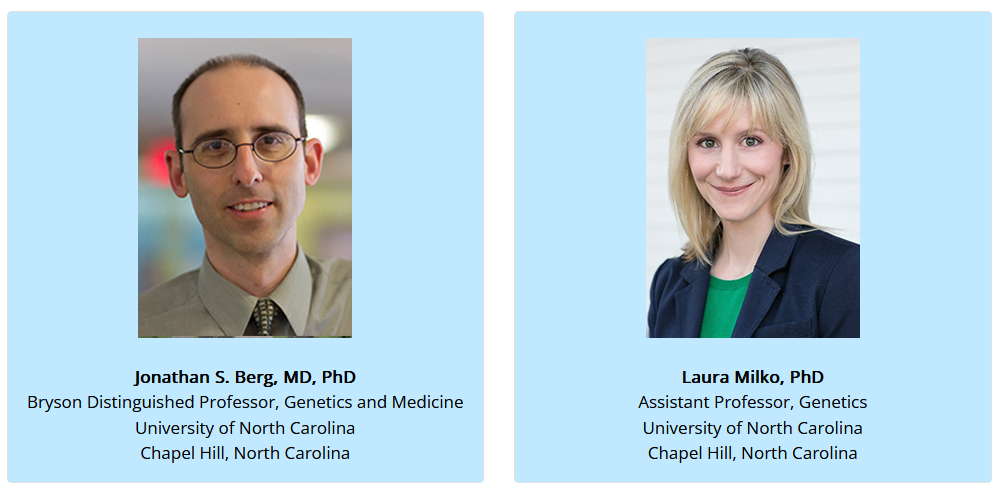
Speakers:

Jonathan S. Berg, MD, PhD
Bryson Distinguished Professor, Genetics and Medicine
University of North Carolina
Chapel Hill, North Carolina

Laura Milko, PhD
Assistant Professor, Genetics
University of North Carolina
Chapel Hill, North Carolina